
8 Best Workout Planner Apps in 2026 (Tested & Ranked)
The best workout planner apps in 2026 compared across planners, trackers, and programmes. Find the right tool for your split, schedule, and goals.
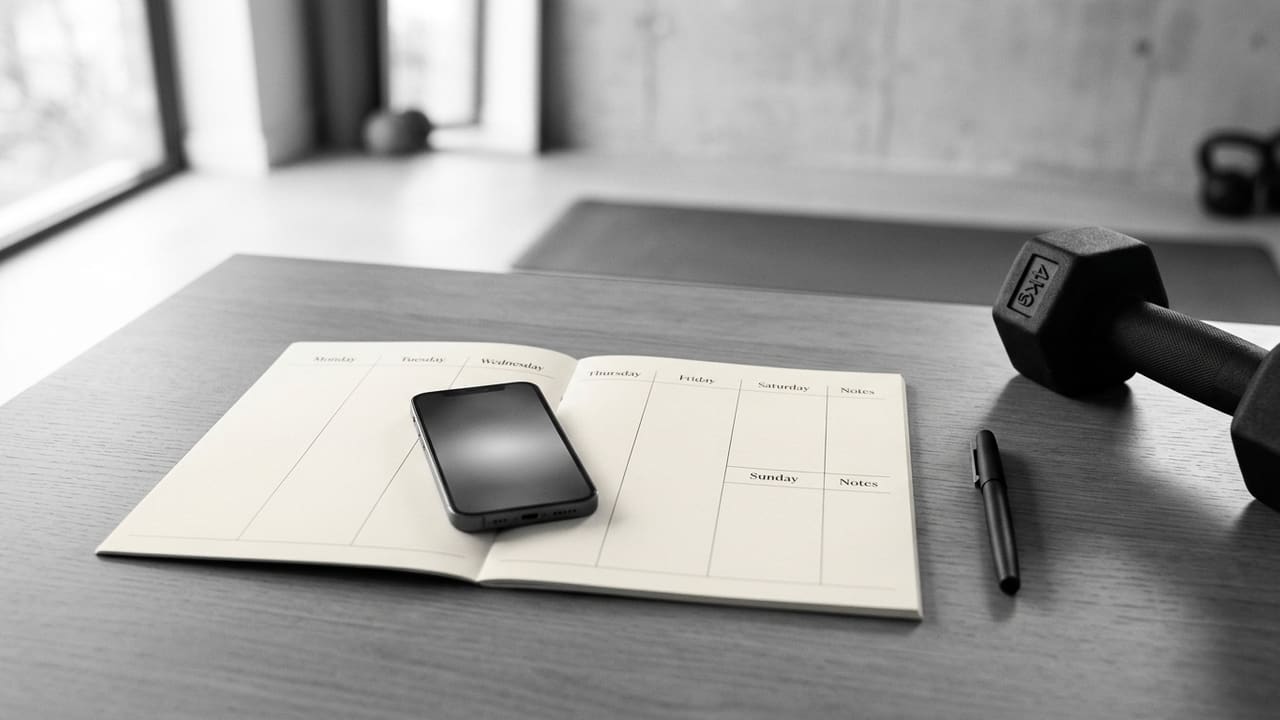
The best workout planner apps in 2026 distinguish between planning a weekly schedule, tracking sets on the gym floor, and generating programmes. For planning your week from saved social videos, Prept is unmatched; for structured coach programmes, Boostcamp leads; and for pure manual logging, Hevy remains the top choice.
The core distinction: planner vs tracker vs programme
The fitness software market suffers from a naming crisis. Hundreds of apps market themselves under the umbrella term “workout planner,” yet they solve three fundamentally different problems:
- The Workout Planner (Scheduling): Solves the logistical question: “What am I training on Thursday, and does my week have enough rest?” Planners allow you to assign routines to calendar days, manage splits (like push/pull/legs or upper/lower), and balance muscle recovery across seven days.
- The Workout Tracker (Logging): Solves the tactical gym-floor question: “How much weight did I lift on my second set last week?” Trackers provide keypads, stopwatches, plate calculators, and historical charts for individual exercises.
- The Training Programme (Prescription): Solves the periodisation question: “What exercises, percentages, and reps should I do over the next 12 weeks to increase my squat?”Programmes dictate progression rules and deload schedules.
Most lifters actually need a hybrid: a clear visual planner to arrange their weekly schedule, backed by a responsive tracker that records data once they unrack the weight.
The best workout planner apps compared
| App | Primary Category | Best For | Free Tier Scope | Platforms |
|---|---|---|---|---|
| Prept | Planner + Video Importer | Scheduling saved social videos into a weekly split | 14 imports/month (TikTok, YouTube); planner and logging included | iOS, Android |
| Boostcamp | Programme Runner | Science-based coach routines (GZCLP, Reddit PPL) | Free access to dozens of popular programmes | iOS, Android, Web |
| Hevy | Workout Tracker | Social lifting logs and gym community feeds | Free tracking up to 4 custom routines | iOS, Android, Watch, Web |
| Strong | Workout Tracker | Minimalist, distraction-free barbell logging | 3 custom routines free | iOS, Android, Apple Watch |
| Fitbod | AI Workout Generator | Algorithm-driven gym routines for machines/dumbbells | 3 free logged workouts total | iOS, Android, Watch |
| Caliber | Programme + Tracker | 100% free evidence-based strength curriculum | Completely free core app with zero ads | iOS, Android |
| JEFIT | Exercise Database | Extensive exercise library & bodybuilding logs | Ad-supported free version with basic logs | iOS, Android, Watch, Web |
| StrongLifts 5x5 | Specialised Programme | Novice linear barbell progression | Free classic 5x5 A/B template | iOS, Android, Watch |
1. Prept — best for planning weeks from saved creator workouts
If your phone’s bookmark folder is filled with TikTok workouts, Instagram reels, or YouTube shorts, traditional fitness apps feel hopelessly disconnected from how you train. Entering a six-exercise kettlebell complex into an empty spreadsheet takes ten minutes of manual typing before you can even touch a weight.
Prept’s weekly workout planner fundamentally shifts the workflow. Instead of expecting you to invent routines from a generic database, Prept extracts exercises, set counts, and rep targets straight from the video URL using multi-modal AI. You share the post directly from Instagram or TikTok, and Prept parses the workout into a clean, trackable routine.
From there, you add routines to Monday through Sunday to build your weekly split, mark rest days, and open any day to see the muscles it covers on a body map — an easy way to notice a week that is all chest and no hamstrings. When you hit the gym, the live workout tracker links the source video directly above each exercise so you can verify form between sets.
- Pros: Reads workouts from 8 platforms plus screenshots and PDFs; weekly planner with rest days and named multi-week plans; per-day muscle map; set-by-set logging with last session pre-filled.
- Cons: Built around workouts you collect rather than pre-packaged 12-week powerlifting periodisation; no rest timer or watch app.
2. Boostcamp — best for running proven coach programmes
Boostcamp has established itself as the modern digital home for famous community lifting programmes. If you want to run Greg Nuckols’ 28 Programs, Eric Helms’ Novice Bodybuilding routine, or the classic Reddit PPL, Boostcamp digitises these spreadsheets with incredible polish.
The app handles percentage-based progression, automatic weight increases, RPE calculators, and deload weeks seamlessly. Rather than squinting at Google Sheets on your phone, Boostcamp delivers an intuitive interface tailored to multi-week strength cycles.
- Pros: Top-tier library of free, respected lifting programmes; automatic progression calculations; clean interface.
- Cons: Limited flexibility for spontaneous workouts or incorporating outside social video routines.
3. Hevy — best for social workout logging and community
Hevy is the undisputed leader in social gym logging. It combines a modern, responsive interface with a Strava-style community feed where friends can follow your workouts, leave comments, and compare personal records.
For lifters who already know their routine and enjoy social accountability, Hevy’s logging experience is exceptionally smooth. It features an extensive exercise directory, Apple Watch integration, and robust volume analytics. You can explore how it compares directly in our best workout log apps guide.
- Pros: Vibrant community feed; seamless Apple Watch logging; comprehensive volume and 1RM progress graphs.
- Cons: Free tier limits users to 4 custom workout routines; no tool to import or parse external social media workouts.
4. Strong — best for distraction-free minimalist logging
Strong remains a staple for barbell athletes who want zero fluff. There are no social feeds, no algorithmic coaching recommendations, and no video reels. You tap an exercise, enter weight and reps on a fast custom numeric keypad, and rest until the countdown timer sounds.
Strong is ideal for lifters who follow a consistent, unchanging routine for years and simply need an uncluttered digital notebook that supports Apple Watch standalone logging.
- Pros: Minimalist speed; excellent Apple Watch app; reliable plate calculator and warm-up calculations.
- Cons: Free version capped at 3 templates; slow product updates; zero support for video imports.
5. Fitbod — best for algorithmic AI workout generation
Fitbod takes the opposite approach to Prept: instead of structuring workouts you chose yourself, Fitbod uses an algorithm to generate a custom workout each day based on available equipment, logged muscle fatigue, and past performances.
If you travel frequently, switch between hotel gyms with limited dumbbells, and prefer not to think about exercise selection, Fitbod’s recommendations take all planning off your shoulders. For a direct head-to-head analysis, read our full Prept vs Fitbod comparison.
- Pros: Automatically adapts to whatever gym equipment is available; adjusts sets based on muscle recovery estimates.
- Cons: Extremely restrictive free trial (only 3 logged workouts before requiring a paid subscription); algorithms sometimes produce illogical exercise pairings.
6. Caliber — best 100% free strength curriculum
Caliber stands out by offering a completely free, ad-free strength training app built on scientific principles. While the company earns revenue through premium human 1-on-1 coaching, its standalone tracking app is entirely free with no locked features.
Caliber includes clear video form tutorials, an evidence-based strength scoring system, and pre-built templates for home and commercial gyms.
- Pros: Truly 100% free with no paywalls or banner ads; high-quality exercise execution guides; transparent metrics.
- Cons: Exercise library customization is slightly rigid; cannot import external routines from social video.
7. JEFIT — best for massive exercise databases
JEFIT is one of the oldest fitness apps on the market, boasting an enormous database of over 1,400 exercises and thousands of user-created community routines.
If you like experimenting with obscure cable attachments, bodybuilding isolation variations, or exploring routine templates created by a global community, JEFIT offers unmatched depth.
- Pros: Gigantic exercise library with detailed animations; desktop web synchronization; deep bodybuilding logging.
- Cons: Dated user interface; ad-heavy free tier; mobile navigation can feel cluttered and unintuitive.
8. StrongLifts 5x5 — best for novice barbell progression
For absolute beginners looking to master the squat, bench press, deadlift, overhead press, and barbell row, StrongLifts 5x5 is legendary.
The app guides you through alternating Workout A and Workout B sessions three days a week, automatically adding 2.5kg (5lb) to the bar each session until linear progression stalls.
- Pros: Eliminates all guesswork for novice lifters; foolproof linear progression logic; clean, bold visual layout.
- Cons: Rigid to a fault; not suitable for hypertrophy, bodybuilding, or intermediate lifters who need varied volume.
How to plan your weekly split effectively
No planner app can save an intrinsically flawed training schedule. When arranging your workouts across the week, follow these foundational rules:
- Equate weekly volume: Aim for 10 to 20 hard working sets per muscle group across the week. If you are uncertain about your split, consult our comprehensive push pull legs split guide.
- Separate heavy muscle days: Allow 48 hours of recovery before training the same muscle group heavily again. Don’t schedule heavy squats the morning after heavy deadlifts.
- Schedule rest deliberately: Treat rest days as non-negotiable appointments on your calendar. Growth occurs during recovery, not in the gym.
- Use automated generators: If you need a framework, test our free workout split generator to assemble a balanced schedule based on your available training days.
Frequently asked questions
What is the difference between a workout planner and a workout tracker?
A workout planner helps you schedule your weekly training split, assign workouts to specific days, and balance muscle recovery. A workout tracker is used live on the gym floor to record individual sets, reps, weights, and rest intervals. Prept combines both functions in one app.
Can I plan a workout split using saved Instagram or TikTok videos?
Yes. Prept is built specifically for this workflow. By sharing a video URL directly into the app, Prept automatically extracts exercises, sets, and rep counts, so you can add the routine to your weekly planner and log it at the gym.
Is there a completely free workout planner app with no subscriptions?
Caliber offers a genuinely free core workout tracking app with zero advertisements or subscription paywalls. Prept’s free plan includes up to 14 imports a month from TikTok and YouTube, with the weekly planner and set-by-set logging, and no card required.
How many days a week should I plan my workouts?
Most lifters achieve outstanding results training 3 to 5 days per week. Three days works best with a full-body routine, four days aligns naturally with an upper/lower split, and five to six days accommodates a push/pull/legs schedule. Plan around your actual schedule consistency.
Do workout planner apps work offline without internet?
It varies. Dedicated loggers like Hevy and Strong are designed to log workouts without a connection. Prept needs a connection to import a workout and to save logged sets, so if your gym has no signal, check that your phone can reach Wi-Fi there before relying on it.
Final verdict: which workout planner should you pick?
If your workouts are born on social media, Prept saves you hours of manual transcription and gives your saved bookmarks an organized weekly home. If you prefer running classic community spreadsheets, Boostcamp is your best bet. And if you simply want a minimal digital notepad for your barbell lifts, Hevy or Strong will serve you reliably for years to come.