
Dumbbell Only Workout Plan (Full Body & PPL Home Guide)
Build muscle at home or in the gym with an evidence-based dumbbell only workout plan. Includes 3-day full body and 4-day PPL routines with no bench options.
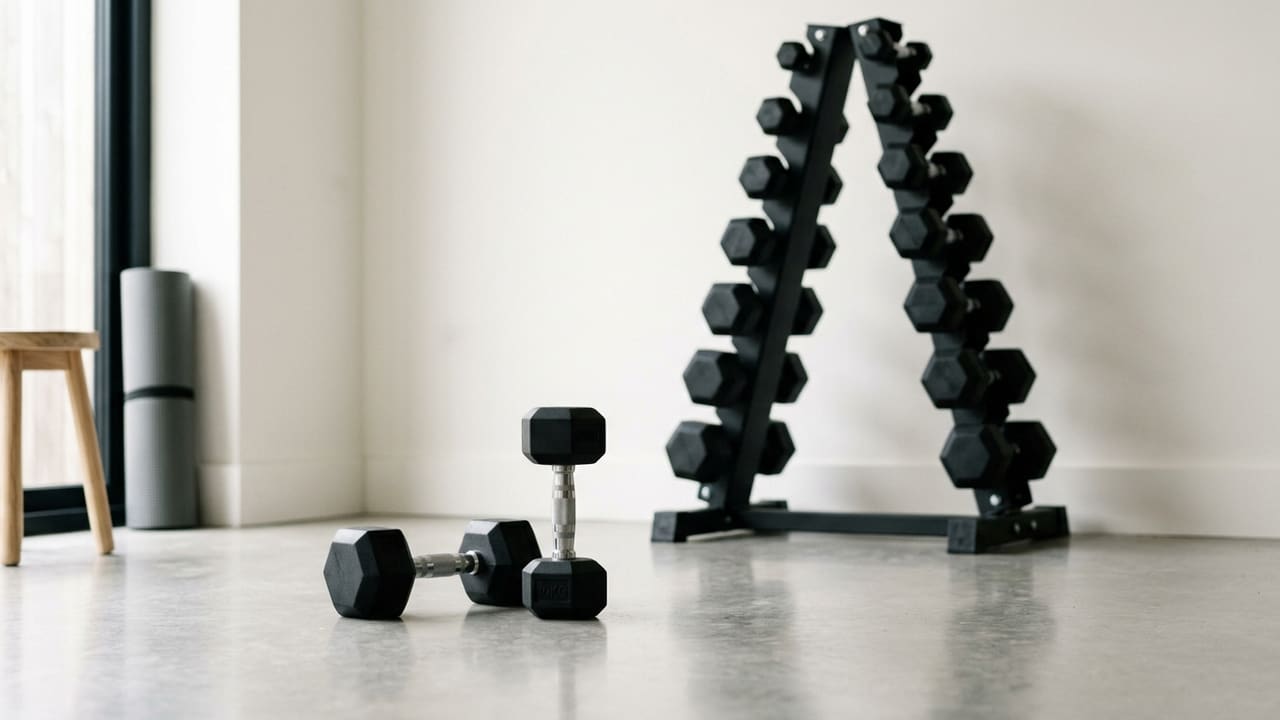
A dumbbell only workout plan builds serious muscle and strength without requiring barbells, machines, or an adjustable bench. By utilising progressive overload, mechanical tension, and unilateral movements, a pair of adjustable dumbbells delivers complete hypertrophy across every muscle group in just 3 to 4 sessions per week.
Why dumbbells alone are completely sufficient for hypertrophy
The fitness industry often implies that serious muscle growth requires commercial cable stacks, plate-loaded leg presses, and specialised barbells. Exercise physiology contradicts this narrative.
Skeletal muscle growth is triggered primarily by mechanical tension—the force generated when muscle fibres contract against an external load near their limit of capacity. Whether that load originates from a \$5,000 commercial selectorised machine or a pair of cast-iron hex dumbbells on your bedroom rug is physiologically irrelevant to the target actin and myosin filaments.
In fact, training with dumbbells provides specific anatomical advantages over fixed barbell training:
- Converging movement arcs: A barbell locks your hands in a fixed horizontal plane. Dumbbells allow your hands to converge naturally at the top of a press, maximising contraction across the sternal head of the pectorals.
- Eliminating side-to-side compensations: On a barbell bench press or squat, your dominant side can subtly absorb 60% of the load. Dumbbells force each limb to stabilise and move 100% of its assigned weight independently.
- Joint-friendly wrist articulation: Lifters prone to shoulder impingement or elbow tendonitis can rotate dumbbells into a neutral (palms-facing) grip, drastically reducing joint shearing forces.
Option 1: The 3-day full body dumbbell workout plan
For trainees working out at home or lifters with limited gym access, a 3-day full body routine is the most efficient structure. Each session trains the entire body with 48 hours of recovery between workouts (e.g., Monday, Wednesday, Friday).
Workout A (Squat & Horizontal Press Focus)
| Exercise | Target Muscle | Sets × Reps | Rest |
|---|---|---|---|
| Dumbbell Goblet Squat (Heels Elevated) | Quadriceps, Glutes | 3–4 × 8–12 | 2 mins |
| Flat Dumbbell Bench Press (or Floor Press) | Chest, Anterior Deltoids, Triceps | 3–4 × 8–10 | 2 mins |
| Dumbbell Romanian Deadlift | Hamstrings, Glutes, Lower Back | 3 × 10–12 | 90s |
| Single-Arm Dumbbell Row (Hand on Knee/Table) | Lats, Rhomboids | 3 × 10–12 / arm | 90s |
| Standing Dumbbell Lateral Raise | Lateral Deltoid | 3 × 12–15 | 60s |
| Overhead Dumbbell Triceps Extension | Triceps (Long Head) | 3 × 10–12 | 60s |
Workout B (Hinge & Vertical Press Focus)
| Exercise | Target Muscle | Sets × Reps | Rest |
|---|---|---|---|
| Dumbbell Romanian Deadlift (Tempo 3-0-1) | Hamstrings, Glutes | 3 × 8–10 | 2 mins |
| Standing or Seated Dumbbell Overhead Press | Anterior & Lateral Deltoids | 3–4 × 8–10 | 2 mins |
| Dumbbell Bulgarian Split Squat | Quadriceps, Gluteus Medius | 3 × 8–10 / leg | 90s |
| Two-Arm Dumbbell Bent-Over Row (Chest at 45°) | Upper Back, Rear Delts | 3 × 10–12 | 90s |
| Standing Dumbbell Hammer Curl | Biceps, Brachialis | 3 × 10–12 | 60s |
| Dumbbell Standing Calf Raise | Calves (Gastrocnemius) | 3 × 15–20 | 60s |
Workout C (Unilateral & Hypertrophy Focus)
| Exercise | Target Muscle | Sets × Reps | Rest |
|---|---|---|---|
| Dumbbell Walking or Reverse Lunges | Quadriceps, Glutes | 3 × 10–12 / leg | 90s |
| Incline Dumbbell Press (or Incline Push-Up Deficit) | Clavicular (Upper) Chest | 3 × 10–12 | 90s |
| Single-Leg Dumbbell RDL | Hamstrings, Hip Stabilisers | 3 × 8–10 / leg | 90s |
| Dumbbell Chest-Supported or Incline Row | Lats, Mid Traps | 3 × 10–12 | 90s |
| Dumbbell Rear Delt Flye (Bent-Over) | Posterior Deltoids | 3 × 12–15 | 60s |
| Dumbbell Skull Crushers (Floor or Bench) | Triceps Brachii | 3 × 10–12 | 60s |
Option 2: The 4-day dumbbell push/pull/legs/upper plan
If you prefer dedicated movement days with slightly shorter, higher-density sessions, a 4-day Upper/Lower or hybrid PPL schedule works exceptionally well:
- Monday: Dumbbell Push (Chest, Shoulders, Triceps)
- Tuesday: Dumbbell Pull (Back, Rear Delts, Biceps)
- Wednesday: Rest & Mobility
- Thursday: Dumbbell Legs & Core (Quads, Hamstrings, Glutes, Calves)
- Friday: Dumbbell Upper Body Hypertrophy (Chest, Back, Arms)
- Saturday & Sunday: Rest
To compare this structure against commercial gym splits, read our full upper lower split guide or our foundational 3-day full body workout.
How to do a dumbbell workout with no bench
One of the most common home training obstacles is not having a dedicated adjustable weight bench. You do not need to purchase one; these proven floor-based adaptations provide identical mechanical tension:
| Standard Bench Exercise | No-Bench Floor Substitution | Execution Coaching Cue |
|---|---|---|
| Flat Dumbbell Bench Press | Dumbbell Floor Press | Lie flat on the floor with knees bent; pause upper arms gently on the floor before pressing. |
| Incline Dumbbell Bench Press | Pillow/Cushion Incline or Deficit Push-Ups | Prop two firm cushions behind your torso, or place feet elevated on a couch with hands on dumbbells. |
| Chest-Supported Incline Row | Tripod Single-Arm Row | Place one hand on a sturdy dining chair or sofa edge with back flat at 45 degrees. |
| Lying Dumbbell Triceps Extension | Dumbbell Floor Skull Crusher | Lie on back; lower dumbbells until the weights lightly tap the carpet just beside your ears. |
| Seated Dumbbell Shoulder Press | Half-Kneeling Overhead Press | Kneel on one knee on a mat; pressing unilaterally forces intense core engagement. |
How to progressively overload with fixed or limited dumbbells
When you train in a commercial gym with racks of dumbbells up to 50kg, progressive overload is simple: you pick up the next heavier pair. But what if your home set caps out at 20kg or jumps in large 5kg increments?
Progression is not limited to adding physical iron. You can overload muscle tissue through five distinct variables:
- Double progression (rep targets): Expand your rep range. Instead of stopping at 3 sets of 8, work up to 3 sets of 15 with the same pair of dumbbells before increasing weight.
- Controlled eccentric tempo: Lower the dumbbells over 3 to 4 seconds instead of 1 second. Slower eccentrics dramatically increase mechanical tension and time under tension per rep.
- Isometric pauses at the stretch: Pause for 2 full seconds at the bottom of a dumbbell goblet squat or Romanian deadlift. Eliminating elastic stretch-shortening reflexes forces your muscle fibres to perform 100% of the concentric work.
- Mechanical drop sets: Perform a difficult unilateral exercise (such as Bulgarian split squats) to near failure, then immediately perform bilateral goblet squats with the same weight without resting.
- Rest interval compression: Shorten your rest periods between sets from 90 seconds to 60 seconds while keeping rep counts constant.
Organising dumbbell workouts with Prept
Social platforms are packed with phenomenal dumbbell routines—from home dumbbell circuits on TikTok to physique hypertrophy sequences on Instagram. But jumping between saved bookmarks on your phone ruins workout intensity.
Prept solves this by importing and scheduling your dumbbell routines in one clean hub:
- Instant video extraction: Paste any social link into our workout video saver, and Prept automatically identifies the dumbbell exercises, sets, and rep targets.
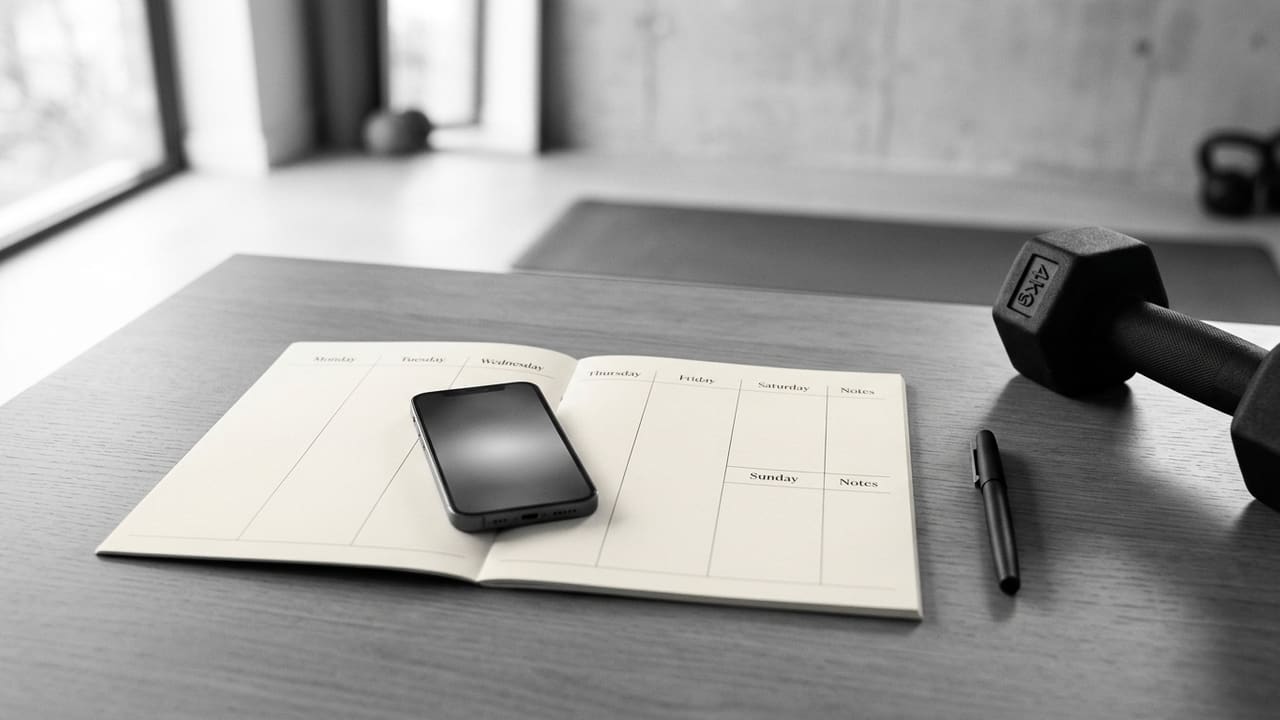
- Visual weekly calendar: Drag your dumbbell sessions into our workout planner to audit your weekly volume distribution.
- Gym-floor follow-along: Launch Prept’s live workout tracker to log completed reps and weights with the video demonstration one tap away, jumped to the exercise you’re on.
To build a custom dumbbell split matching your specific weekly schedule, try our free workout split generator.
Frequently asked questions
Can you build big arms and legs with only dumbbells?
Yes. Dumbbell exercises like Bulgarian split squats, Romanian deadlifts, hammer curls, and overhead tricep extensions provide world-class mechanical tension. By taking sets close to muscular failure (1–2 RIR), dumbbells build arm and leg muscle as effectively as barbells or machines.
How heavy should my dumbbells be to build muscle at home?
For men, an adjustable pair that scales from 5kg to 25kg (or 10lb to 50lb) covers most compound and isolation movements. For women, a set scaling from 2kg to 15kg (or 5lb to 35lb) provides an ideal starting range with room for long-term progressive overload.
Is a 3-day dumbbell workout enough to see results?
Yes. Training 3 days a week on a full-body dumbbell split allows you to hit every major muscle group 3 times weekly. Provided you eat adequate protein and progressively challenge your muscles, 3 sessions per week delivers consistent, measurable physique changes.
Are adjustable dumbbells worth the investment?
Yes. A single pair of quick-adjust dumbbells replaces 15 pairs of fixed weights, saving significant home floor space and hundreds of dollars. They allow micro-increments essential for progressing on smaller isolation movements like lateral raises and curls.
Can I do this dumbbell plan if I don’t own a bench?
Yes. Every pressing exercise in this routine can be performed on the floor (dumbbell floor press), and rowing movements can be executed with a tripod hinge or bent-over stance without requiring any bench equipment.
The bottom line
You do not need an expensive gym membership or complex commercial machinery to transform your physique. With a single pair of dumbbells, an uncompromising focus on progressive overload, and a consistent 3-to-4-day weekly plan, you have everything required to build real strength and lasting muscle.